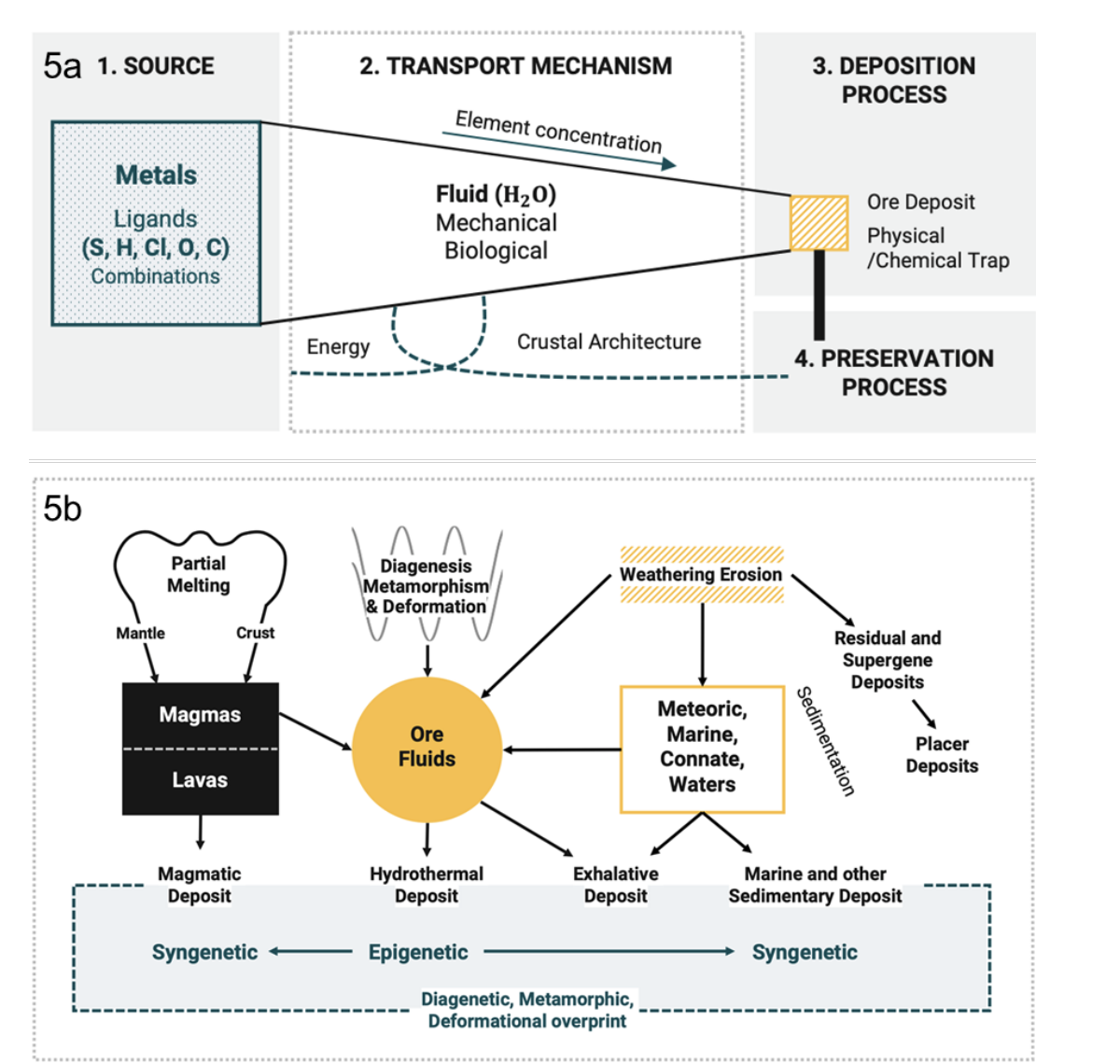
Biomining represents one such change in recovery capability. The term describes the use of microorganisms and biologically produced compounds to release metals from ores, concentrates, and waste. Biological processing can also prepare a mineral for subsequent extraction or capture selected metals after they enter solution. Its significance extends beyond biotechnology

Mineral wealth is often presented as a fixed geological endowment. Economic value, however, depends on more than the quantity of metal beneath the ground. Extraction requires a workable method for separating that metal from surrounding material and producing a form that industry can use. Advances in processing can therefore enlarge the economically relevant resource base without changing the geology itself. A deposit, stockpile, or waste stream can acquire new value when improved recovery methods change what can be extracted, at what cost, and under which operating conditions.
Biomining represents one such change in recovery capability. The term describes the use of microorganisms and biologically produced compounds to release metals from ores, concentrates, and waste. Biological processing can also prepare a mineral for subsequent extraction or capture selected metals after they enter solution. Its significance extends beyond biotechnology. By altering the materials that can be treated economically, biomining can affect the productive life of mines, the value of accumulated waste, and the infrastructure required for mineral supply.
Commercial relevance will emerge through specific applications rather than the wholesale replacement of conventional processing. High grade material that responds efficiently to established methods will continue to support smelting and hydrometallurgy. Biological routes become more consequential near the economic margin, where low metal concentration, difficult mineralogy, or high energy requirements weaken conventional recovery. Tailings, low grade stockpiles, metallurgical residues, and electronic waste occupy that margin. These materials already exist in considerable quantities, yet much of their metal content remains outside present production.
Biomining can move the boundary separating ore from waste. Such movement creates a form of mineral optionality within assets that were previously valued only for their current production, remaining reserves, or closure obligations. The resulting opportunity lies partly in microbial technology, but extends further into resource ownership, brownfield infrastructure, process integration, and downstream separation. Biological progress matters when it changes the future use of a physical asset.
Conventional metal production begins by removing ore from a deposit and reducing it to smaller particles. Crushing and grinding expose mineral surfaces. Concentration separates a portion of the valuable mineral from surrounding rock. Heat, pressure, or chemical leaching then releases the desired metal. Material remaining after concentration becomes tailings, while residues from later processing can form slag, dust, sludge, or other industrial waste.
These residual materials often retain metal. Earlier processing may have targeted only one commodity, leaving associated elements behind. Recovery equipment may have been designed for a particular particle size or mineral phase. Historical metal prices could also have made further treatment uneconomic. As a result, discarded material can contain metal that remains physically present but commercially inaccessible.
Biomining introduces biological activity into the separation process. Acidophilic bacteria and archaea can obtain energy by oxidizing ferrous iron and reduced sulfur compounds. Their metabolism regenerates ferric iron, which chemically attacks metal sulfides and releases metal ions into solution. Sulfur oxidation helps maintain the acidic environment needed for continued dissolution. Microorganisms therefore sustain a chemical cycle that would otherwise slow as reactive compounds were consumed.
Fungi and other heterotrophic organisms operate through different pathways. Their metabolism can produce citric, oxalic, gluconic, and related organic acids. Acidity displaces metals from mineral structures, while organic molecules form soluble complexes with certain ions. Other biological processes alter the oxidation state of a mineral or bind dissolved metals to cellular surfaces. Together, these mechanisms allow biological processing to act on sulfide ores, oxidized materials, industrial residues, and manufactured waste.
Finished metal still requires conventional recovery after biological treatment. Bioleaching transfers metal from a solid material into a liquid stream. Biooxidation alters a mineral matrix so another extraction method can reach the target. Biosorption uses biological surfaces to capture ions already present in solution. Solvent extraction, precipitation, ion exchange, or electrowinning then concentrates and purifies the recovered material. Commercial biomining therefore forms part of a processing sequence rather than a self contained method of production.
Ore grade describes metal concentration, while recoverability describes how much of that metal can enter a saleable product. Mineral structure links the two. Copper contained in a readily leached mineral can carry different economic value from the same concentration of copper locked within a resistant phase. Grain size, mineral association, and surface chemistry govern access to the target. Impurities influence acid consumption and downstream purification.
Biological performance follows the same mineralogical conditions. An organism suited to one sulfide can perform poorly against another. Organic acids capable of mobilizing a metal from an oxide may have little effect on a different mineral structure. Temperature and salinity influence microbial activity. Alkaline feedstock can neutralize biologically produced acid before meaningful extraction occurs. High concentrations of dissolved metals may eventually inhibit the organisms responsible for releasing them.
Research involving mine tailings demonstrates the importance of such specificity. Biological treatment of several tailings fractions recovered cobalt, copper, zinc, and arsenic through acidophilic microbial communities. Lead responded more effectively to organic acids produced by a bacterium and a fungus. Recovery changed across fractions because each contained a different mineral and chemical environment. The result carries a direct economic implication. Biological capability cannot be valued independently from the material on which it operates.
Commercial analysis must therefore begin with the physical inventory. Elemental assays establish what is present, but mineralogical work determines how those elements are held. Process testing then identifies the conditions required for release. Feedstock quality, biological mechanism, and downstream recovery must converge before scientific possibility becomes an investable production route.
Tailings offer an early application because several costly stages of mineral development have already occurred. Material has been extracted from the ground and transported to a known location. Crushing and grinding may have created substantial exposed surface area. Roads, power, water systems, laboratories, and processing equipment can remain nearby. Historical operating records may provide additional evidence regarding composition.
These advantages place tailings between a waste liability and a mineral asset. Their economic status depends on residual metal content, mineral accessibility, and the cost of another recovery cycle. Biological treatment becomes relevant when conventional reprocessing requires more energy or chemical intensity than the remaining metal can support.
Tailings ownership can therefore contain unrecognized optionality. A storage facility created under one recovery technology may become feedstock under another. Rising commodity prices can strengthen that option, but technology can change the underlying recovery curve more directly. Biological progress can make a larger portion of the inventory accessible without requiring a new discovery or mine development.
Environmental obligations can reinforce the opportunity. Tailings facilities require monitoring, water management, and eventual closure. Reprocessing may reduce total volume or remove metals capable of generating contaminated drainage. Product revenue and liability reduction can then arise from the same intervention. Economic value will depend on whether recovery improves the residual material and avoids creating a more difficult waste stream.
Variation within a tailings facility remains a central risk. Historical deposition can produce layers with different particle sizes and metal concentrations. Weathering may alter minerals near the surface while leaving deeper material relatively unchanged. Water chemistry can vary across the site. A successful project therefore requires more than a representative assay. Resource characterization must be detailed enough to support a stable biological process.
Existing operations offer a stronger setting for early deployment than isolated greenfield projects. Brownfield sites already contain the systems required to move material, manage fluids, and recover metal. Experienced personnel understand operating conditions. Permitting boundaries and environmental responsibilities are better defined. Biological processing can enter as an additional treatment stage without carrying the full development burden of a new mine.
Low grade stockpiles provide one route. Material excluded from the main plant may still contain recoverable metal, although its grade cannot support the existing flowsheet. Biological leaching can establish a separate recovery pathway suited to slower treatment. Tailings and metallurgical residues provide another route. A biological stage can release metals that earlier processing left behind, while the existing site supplies power and downstream recovery.
Mine life can also change. Production usually declines as remaining ore becomes lower grade or more difficult to process. A new recovery method can extend the period during which an established site generates useful output. Infrastructure originally justified by the primary deposit may continue operating against secondary feedstock. Closure planning can gradually incorporate residual recovery, allowing productive use and remediation to proceed together.
Brownfield integration also reveals where economic value may accumulate. A laboratory strain carries limited value without suitable feedstock and industrial support. Ownership of a compatible mineral inventory provides the physical basis for production. Existing infrastructure reduces the capital required for implementation. Operating knowledge then governs whether biological performance can be repeated at commercial scale.
Laboratory recovery establishes that a biological mechanism can work. Commercial performance depends on how much material can be processed through a given asset over time. Reaction rate, equipment utilization, and final product quality therefore matter alongside recovery percentage.
Residence time presents the most visible challenge. Biological reactions can require days or weeks, while thermal or chemical processes may proceed much faster. Slow treatment occupies heap area or reactor volume and delays revenue. Higher final recovery can still produce weaker economics when the process turns over too little material. Commercial design must balance extraction percentage against productive throughput.
Pulp density creates a related problem. Greater solid content increases the amount of potential metal held within each reactor. Dense slurries also become harder to mix and aerate. Dissolved toxins accumulate more rapidly, while nutrients and oxygen reach microorganisms unevenly. Research on biologically treating bauxite residue has identified solid concentration as a central barrier to scale because conditions supporting higher throughput can suppress microbial activity.
Particle size also carries an economic tradeoff. Fine grinding exposes more mineral surface and can improve recovery. Additional grinding consumes energy and produces material that may complicate fluid flow or solid separation. Coarser particles reduce preparation costs but can leave valuable minerals inaccessible. Optimal size depends on mineral structure and the configuration of the biological process.
Heap systems and stirred reactors address these constraints differently. Heaps allow leaching solution to move through large quantities of crushed material with limited mechanical agitation. Capital and energy requirements can remain comparatively moderate, but treatment is slow and internal conditions vary. Stirred reactors provide closer control over temperature, oxygen, acidity, and mixing. Greater control can accelerate recovery, although equipment and energy requirements rise. Economic value depends on matching process intensity with the concentration and value of the feedstock.
Monitoring becomes essential because biological and mineral conditions change during operation. Acidity and oxidation reduction potential reveal shifts in solution chemistry. Temperature and dissolved oxygen indicate whether microbial activity can continue. Flow measurements identify poor circulation through a heap. Chemical assays measure metal release and impurity formation. Statistical models can connect these observations with recovery, allowing operators to identify process drift before a material loss becomes visible.
Operating data may eventually become a durable advantage. Biological performance reflects relationships among organisms, minerals, and site conditions. Repeated operation produces evidence regarding those relationships. Process records can improve feed blending and reaction control. Accumulated knowledge can also shorten development work when similar materials enter the system.
Metal entering solution has crossed only the first commercial boundary. Leachate can contain the target metal alongside iron, aluminum, calcium, arsenic, and other constituents. Purification determines whether dissolved material becomes a product or another waste stream.
Copper and certain base metals can enter established solvent extraction and electrowinning systems. More complex materials may require selective precipitation or ion exchange. Rare earth elements present a greater challenge because neighboring elements possess similar chemical behavior. Biological binding may eventually contribute selectivity, but separation must remain stable across changes in acidity and competing ions.
Research involving rare earth binding has shown that cellular biology can affect both total adsorption and relative preference among lanthanides. Such work expands biomining beyond mineral dissolution and toward biological separation. Commercial progress would create value in processes capable of connecting leaching, selective capture, and final purification.
Downstream capability can therefore determine which participant captures economic value. Resource ownership provides access to material. Biological technology provides a recovery mechanism. Engineering creates throughput. Separation produces the commodity. A defensible operating position forms where these functions remain coordinated through one commercial process.
Lower operating temperature gives biomining a potential energy advantage. The conclusion cannot be separated from the remaining flowsheet. Grinding, aeration, pumping, nutrients, water treatment, and purification continue to consume resources. Long residence times can also increase the infrastructure required for a given production rate.
A recent life cycle analysis compared several routes for producing battery grade nickel sulfate. Sulfidic tailings bioleaching required substantially less direct energy than the modeled rotary kiln route. Broader environmental performance remained dependent on electricity supply and material inputs. Biological processing therefore relocates the principal constraint instead of removing it.
Thermal intensity may decline while time and fluid management become more important. Reagent use may fall while biological stability gains importance. Reduced mining demand can accompany greater attention to waste characterization and downstream residues. Environmental value emerges when the complete system improves, including the condition of material remaining after recovery.
Space biomining remains an early scientific field, yet its underlying rationale clarifies the terrestrial investment case. Transported mass carries an exceptional cost beyond Earth. Large furnaces, replacement equipment, and chemical reagents would require continued resupply. Microorganisms can reproduce from a small initial culture and generate reactive compounds from locally available material, provided that water, nutrients, and suitable operating conditions are maintained.
Experiments aboard the International Space Station have tested microbial interaction with basalt and asteroidal material. One bacterial species increased the release of rare earth elements from basalt across several gravity conditions, while other organisms produced weaker results.Later research using asteroidal material found that fungal activity enhanced the release of palladium, platinum, and other elements under microgravity.Separate work demonstrated fungal extraction of several metals from a lunar regolith simulant under controlled laboratory conditions.
Commercial space mining remains distant. Water recovery and nutrient supply would need to operate within a closed system. Radiation and reduced gravity could alter microbial behavior. Reactors would require containment and thermal control. Metal released into solution would still need to be separated and converted into useful material.
Scientific importance lies in the operating constraint that space makes visible. Biological extraction becomes more attractive as energy, equipment, and transported inputs become more expensive. Low grade terrestrial resources present a milder version of the same problem. Easier material can support intensive processing, while marginal material requires methods adapted to lower energy and greater selectivity.
Biomining changes resource economics by changing recoverability. Existing geology gains another possible use. Tailings can become secondary feedstock. Low grade stockpiles can support production outside the original plant. Industrial residues can supply metals that earlier processes were never designed to recover. Brownfield infrastructure can remain productive beyond its initial purpose.
Investment relevance extends across the resulting chain. Owners of suitable inventories control the physical resource. Process developers provide the biological and engineering capability needed to reach it. Operators convert variable reactions into reliable production. Separation businesses determine whether dissolved metals meet commercial specifications.
Technical progress will affect each asset unevenly. Favorable mineralogy can support biological recovery, while resistant phases can preserve the boundary between resource and waste. Existing infrastructure can improve economics, while long residence times can absorb too much capital. Valuable metals can enter solution, yet difficult purification can prevent commercial production. Scientific capability establishes possibility; industrial integration determines value.
The central investment observation concerns the relationship between processing and asset value. Mineral inventories carry economic meaning only through the methods available to recover them. As biological processing advances, portions of the existing material base can move from liability or marginal inventory into productive use. No new geology is required for that transition.
Biology becomes mining infrastructure when microbial activity changes what an asset can produce. Commercial significance then appears through longer operating life, new sources of feedstock, and metal recovered from materials the previous system left behind.
.jpg)

SKGP Strategic Partners
© 2026 SKGP Strategic Partners. All rights reserved. All proprietary frameworks, research, and materials are the intellectual property of SKGP Strategic Partners. Unauthorized use or distribution is prohibited.