Project Aurune is being researched and developed through SKGP Strategic Partners as patient centered health infrastructure. Its premise begins with a fundamental asymmetry: healthcare institutions encounter the individual episodically, while the individual’s health, responsibilities and relationships continue across every encounter.Aurune is conceived as both a shared application environment and an orchestration layer connecting the systems, institutions and people surrounding that individual.

SKGP Strategic Partners Investment Research
United States healthcare expenditure reached $5.3 trillion in 2024, representing 18 percent of Gross Domestic Product. Federal projections place that share at 20.6 percent by 2034. Hospital expenditure alone reached $1.63 trillion, while physician and clinical services exceeded $1.1 trillion. Few industries command comparable concentrations of capital, professional expertise and institutional capacity. Yet the organization of those resources around the individual receiving care remains remarkably weak (CMS). Behind those aggregate figures sits a system divided by institutional boundaries. Primary care, laboratories, specialists, hospitals, pharmacies and insurers each record their portion of a person’s care through separate systems, accounts and operating procedures. Connecting those portions frequently becomes the responsibility of the patient, caregiver or clinical staff. Referrals are traced through telephone calls, forms travel through printers and fax machines, and medication questions cross several inboxes before reaching someone authorized to act. Information may exist at every stage while the transaction surrounding it remains incomplete.
Clinical capacity is consumed in the process. Physicians reported an average working week of 57.8 hours in 2024, of which 27.2 hours were spent providing direct patient care. Documentation, orders, results and referrals required another 13 hours, while administrative responsibilities such as insurance forms and prior authorization absorbed 7.3 hours (AMA). These figures describe a consequential allocation problem: highly trained professionals spend substantial portions of their time reconstructing information and advancing administrative processes around the clinical decision itself. Beyond formal institutions, families supply another layer of unpaid coordination. Approximately 59 million Americans provide care to adults, contributing an estimated 49.5 billion hours each year. The economic value of that labor reached roughly $1.01 trillion in 2024 (AARP). Their responsibilities extend across medications, appointments, transportation, records, medical tasks and communication among providers, often without a complete view of what has occurred, who remains responsible or what requires attention next. Healthcare has built capable systems for recording individual encounters. The larger opening lies in preserving continuity across the spaces between them.
Policy and technical standards have materially improved the exchange of health information. Since January 1, 2023, users of certified Electronic Health Record (EHR) systems have been required to make standardized Fast Healthcare Interoperability Resources (FHIR) APIs available for patient and population services. By 2024, nine in ten hospitals enabled patients to access information through an API, while seven in ten supported access through a standards based API (ASTP). Nationwide exchange has advanced alongside those requirements. The Trusted Exchange Framework and Common Agreement became operational in December 2023 with five Qualified Health Information Networks. By August 2025, participation had expanded to more than 9,200 organizations across ten networks, representing over 41,000 connections among clinicians, hospitals, clinics, long term care facilities and public health authorities (TEFCA). Together, these developments establish increasingly capable rails for authorized information exchange.
Record movement, however, represents one stage within a longer operating process. Once information reaches another institution, someone must identify the responsible department, confirm authorization, obtain missing material, secure professional approval, complete the required action and communicate the result. Exchange makes information available; orchestration turns that availability into an outcome. Patterns of patient access make the distinction visible. During 2024, 59 percent of individuals reported holding more than one online medical record or patient portal, while only 7 percent used an application that combined information from separate portals (ASTP). Even complete aggregation would leave the individual determining whether a referral arrived, why a prescription stalled, which medication list governs or where a completed form belongs. Healthcare’s next infrastructural requirement is therefore broader than exchange. Information must acquire context, responsibility, authorization and a visible path to completion.
Project Aurune is being researched and developed through SKGP Strategic Partners as patient centered health infrastructure. Its premise begins with a fundamental asymmetry: healthcare institutions encounter the individual episodically, while the individual’s health, responsibilities and relationships continue across every encounter.Aurune is conceived as both a shared application environment and an orchestration layer connecting the systems, institutions and people surrounding that individual. Electronic Health Records, patient portals, pharmacy systems, laboratory platforms, insurer systems, employer benefit programs and connected devices continue performing their established functions. Above them, Aurune coordinates the information and activity moving from one participant to another, preserving context and responsibility throughout the process.
At the center of this environment sits a persistent personal account containing identity, permissions, records, medications, requests, documents, appointments, care relationships, assigned actions and completion history. Because the account follows the individual across providers, locations, insurers and stages of life, a change in institution would cease to require reconstruction of the surrounding process. New participants enter an existing health environment instead of creating another disconnected version of it.Distinct, permissioned interfaces translate that common account into the working view required by each participant. Patients and caregivers see the complete personal process. Physicians and nurses receive clinical information and prepared actions requiring professional attention. Hospitals and clinics manage institutional work. Pharmacies and laboratories receive the orders and supporting material relevant to their transactions. Insurers address coverage and authorization, while employers participate solely in employment related processes. Every interface draws from the same underlying record of identity, permission, activity and status.
Taken together, these elements would allow a complicated network of healthcare systems to behave like one continuous environment. Much as the modern smartphone concealed a dense collection of networks, protocols and services behind a familiar daily object, Aurune seeks to make fragmented healthcare infrastructure usable through one persistent interface. Its long term ambition is to become an expected healthcare utility, present wherever care occurs and largely unnoticed when the underlying process functions correctly.
From the personal interface, patients and caregivers would encounter a continuing account of records, medications, appointments, referrals, forms, care team relationships, device information and unresolved requests. Every item would retain its source, present condition, responsible participant and next required action. Caregiver access could be defined according to responsibility, information category and duration, allowing families to coordinate care without distributing unrestricted copies of the individual’s complete medical history.
Clinical teams would encounter the same underlying process through an interface organized around judgment and action. Routine requests could arrive with available patient information, institutional details, supporting records and required documents already assembled. Medication questions, referral corrections, disability certifications and other recurring work would enter the appropriate queue with known fields completed. Instead of locating forms and reconstructing context, the clinician could review the relevant information, amend anything requiring correction, apply professional judgment, sign and authorize transmission.Within hospitals and clinics, an institutional interface could direct incoming requests, external records, referrals, discharge activity, forms and unresolved matters toward the appropriate department or professional role. Because each task remains connected to the patient’s continuing account, administrators gain visibility into completion times, recurring delays and areas where work accumulates. Operational leaders could then distinguish isolated errors from persistent weaknesses in staffing, routing or institutional procedure.
Pharmacies and laboratories participate through transaction specific views containing the order, identifiers, authorization and supporting information required for their work. Receipt can be acknowledged immediately, corrections returned to the responsible source and completion reported to every authorized participant. What previously required a chain of disconnected calls becomes one continuing transaction with a shared status.Employment related processes demonstrate how several interfaces can contribute to a single outcome. Once an employee identifies a verified employer account, Aurune could assemble known employment, coverage and request information. Human resources confirms employment details through the employer interface, the benefits administrator or insurer completes its assigned portion, and the clinician addresses the medical certification within the clinical view. Each participant sees the fields and supporting information relevant to its authority, while Aurune combines the completed portions, routes the final certification and records its receipt.
Because every participant works through the same underlying transaction, responsibility remains visible as it passes among them. Documents become outputs of the process rather than the process itself. Where an institution still requires a conventional form, Aurune generates the appropriate document from structured information already reviewed by the responsible parties. Paper and fax can remain available as delivery formats without continuing to define how the work is performed.
Coordination begins whenever a patient statement, caregiver message, clinical order, uploaded document, device measurement or institutional event creates a need for action. Aurune’s orchestration layer interprets the intended outcome, retrieves the authorized context, determines which participants are required and assigns each portion of the process according to responsibility.Medication requests illustrate how this orchestration differs from simple messaging. Resolving a missing prescription may require information from the patient, prescribing clinician, pharmacy and insurer. Aurune would compare the clinical order, transmission record, pharmacy acknowledgment and any applicable coverage requirement before directing the next action. Whichever participant holds responsibility receives a prepared task containing the relevant information, while all authorized parties retain a common view of progress.
Referral workflows follow the same principle. The referring order, receiving institution, required records, coverage status, scheduling condition and eventual result remain connected throughout the process. Missing information returns directly to its source, while an unacknowledged referral remains active until receipt is established. Scheduling and clinical completion become identifiable stages within a continuing process rather than parts of an uncertain handoff. Artificial intelligence supports this environment by classifying requests, organizing evidence, identifying missing fields, comparing conflicting records, preparing routine work and directing transactions toward the proper institutional destination. It may also monitor expected responses and surface delays for attention. Authority remains explicit throughout: clinicians govern medical decisions, patients or legally authorized representatives control consent, insurers determine coverage and employers receive information limited to the relevant employment transaction.
Connectivity adapts to each counterparty. Structured exchange can proceed through Fast Healthcare Interoperability Resources APIs and approved institutional connections, while Direct messaging, existing portals, secure document transfer and electronic fax continue supporting organizations with older systems. Regardless of the transmission method underneath, Aurune preserves a consistent experience, transaction history and assignment of responsibility.Such flexibility permits gradual adoption across a healthcare system that will modernize unevenly. A connected institution can participate directly through its existing platform, while another receives the same authorized transaction through an established channel. Aurune maintains continuity across both environments, allowing the value of orchestration to emerge before universal technical integration becomes possible.Large EHR(Epic's/MyChart etc) have pieces built however none can become a neutral layer. Haven/Google/apple health having built better access to fragmented data didn't change how institution's work got done.
Near term commercial value arises from resolving present administrative and clinical workflows. Once those workflows accumulate within a persistent account, continuity creates a broader opportunity. Healthcare records are commonly assembled around discrete encounters such as an office visit, hospitalization, laboratory result, prescription or insurance claim. Preventive care depends equally on what unfolds between those events. Changes in blood pressure, sleep, activity, symptoms or medication adherence frequently develop outside the clinical setting. Follow up recommended by a specialist may remain incomplete, while gradual changes in condition escape attention until another acute episode brings the patient back into care. No single encounter can provide the uninterrupted view required to understand that progression.
With appropriate permission, Aurune could combine clinical information with data from Apple Health, Oura, Fitbit and home monitoring devices, placing new measurements against medications, diagnoses, treatment plans, symptoms and prior results. Significant changes and incomplete preventive actions could then reach the appropriate participant for review within the same environment already managing routine care. Preventive capability would therefore emerge from accumulated continuity rather than from a separate wellness experience. Prescriptions, referrals, forms, visits, measurements, decisions and outcomes gradually form a longitudinal account of treatment and response. Over time, that record could help healthcare recognize material changes earlier, direct attention more deliberately and complete preventive action with greater consistency.
Administrative fragmentation imposes costs across the healthcare economy. Provider organizations absorb staff time through repeated calls, incomplete referrals, duplicated documentation and unresolved complaints. Clinical professionals lose hours that could support additional patient care. Insurers encounter avoidable service use and failed transitions, while employers face delays in benefits, disability and return to work processes. Patients and caregivers supply the unpaid labor required to keep these activities moving. Accordingly, Aurune’s economic case rests on measurable operating improvement. Completion time, repeated contact volume, referral leakage, documentation errors, medication discrepancies, avoidable visits, unresolved requests and recovered clinical capacity provide direct measures of present inefficiency. Tracking those measures before and after deployment would establish the value created through orchestration and determine which workflows support a durable commercial model.
Distribution through institutions offers a more efficient path than individual consumer acquisition. Health systems, insurers, employers, accountable care organizations and public programs already maintain relationships with defined populations. Aurune could become available during registration, discharge, referral, benefits enrollment or the beginning of a caregiver relationship, giving the individual a continuing account while the sponsoring institution receives the operating capabilities relevant to its role. Commercial arrangements may include enterprise agreements, implementation fees, covered member pricing and transaction based charges. Their composition would reflect the buyer, workflow and source of measurable value. Provider organizations may emphasize recovered staff capacity and referral completion; insurers may prioritize preventive action, care transitions and avoidable utilization; employers may concentrate on faster benefits administration and greater certainty surrounding leave or disability processes.
Network utility develops as participation expands by workflow, counterparty and institution. Outside organizations may initially receive authorized transactions through their existing channels, then adopt direct connections as volume makes integration more efficient. Every additional connection improves routing, reduces manual handling and increases Aurune’s usefulness for the participants already operating within it. If institutional adoption and economic performance are established, the resulting asset would combine recurring usage, growing transaction volume and a persistent relationship with the individual. Institutions supply distribution, routine workflows sustain engagement and new connections deepen utility. Aurune could thereby develop beyond a software product into a standard healthcare operating service that individuals and institutions use as part of ordinary care.
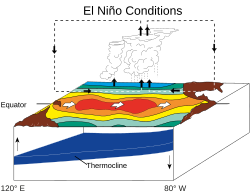
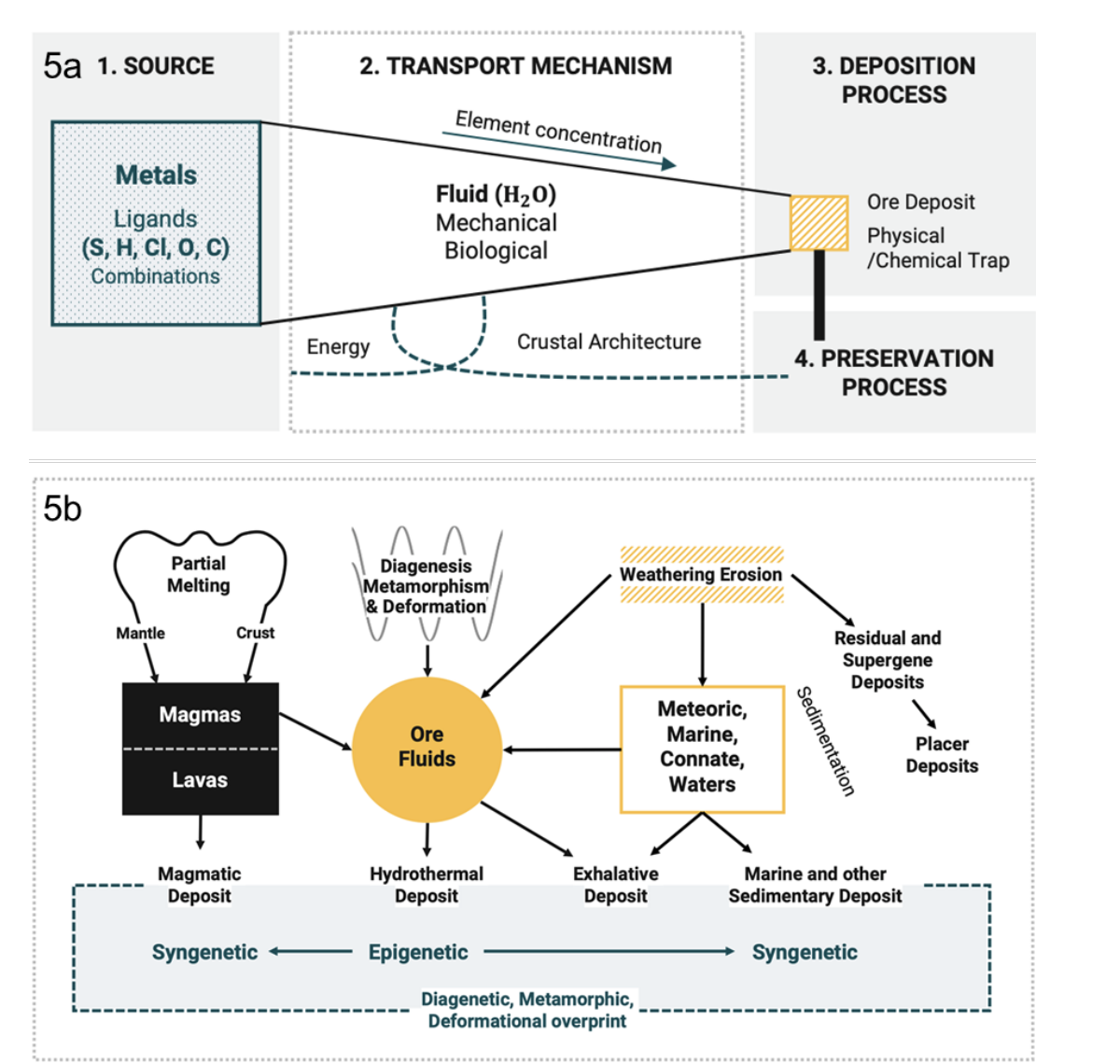
Project Aurune arose from direct observation of administrative work across hospitals, clinics and other healthcare environments. SKGP identified the underlying gap through research spanning biological and engineered systems. Healthcare delivery provides the biological and institutional setting; identity, data connections, permission systems, workflow control and computation supply the engineered response.As originator, sponsor and developer, SKGP would direct Aurune through the same investment process applied across the firm’s broader mandate. Research identifies the constraint governing performance, development defines an investable intervention, and the required technical, operating, institutional and financial capabilities are assembled around it. Capital supports construction as material uncertainties are reduced, allowing ownership to retain exposure to the infrastructure created through that process.
Healthcare already possesses powerful institutions, extensive information systems and extraordinary professional capability. What remains missing is the continuity that allows those resources to operate around the individual as one coherent system. Project Aurune addresses that gap through a persistent personal account, distinct institutional interfaces and an orchestration layer capable of carrying authorized work from request to completion. Initially, the opportunity lies in reducing administrative effort and resolving transactions that repeatedly fail between institutions. Greater significance emerges as the same infrastructure begins to make healthcare function as a connected service around each person. Patients, caregivers, clinicians, pharmacies, laboratories, insurers and employers continue performing different roles, while Aurune maintains the identity, permission, context and status linking their work.
With broader adoption, paperwork becomes a generated record of a completed process instead of the mechanism used to coordinate it. Separate portals recede behind a familiar environment, institutional complexity moves beneath the interface and continuity extends beyond isolated encounters into preventive care. What begins as improved coordination could mature into a durable layer through which healthcare organizes itself around the person.
Aurune is ultimately intended to become infrastructure that people simply expect healthcare to possess: persistent across institutions, familiar to every participant and present throughout the individual’s life. In that model, the person supplies continuity, institutions contribute their respective capabilities, and Aurune arranges those capabilities into a coherent course of action.


SKGP Strategic Partners
© 2026 SKGP Strategic Partners. All rights reserved. All proprietary frameworks, research, and materials are the intellectual property of SKGP Strategic Partners. Unauthorized use or distribution is prohibited.