SKGP connects scientific research with the development and ownership of businesses. Our interests span mineral discovery, healthcare and energy, including external companies and projects originated within the firm. In businesses developed through SKGP, shared capabilities could earn revenue from independent customers while improving assets we acquire or build.

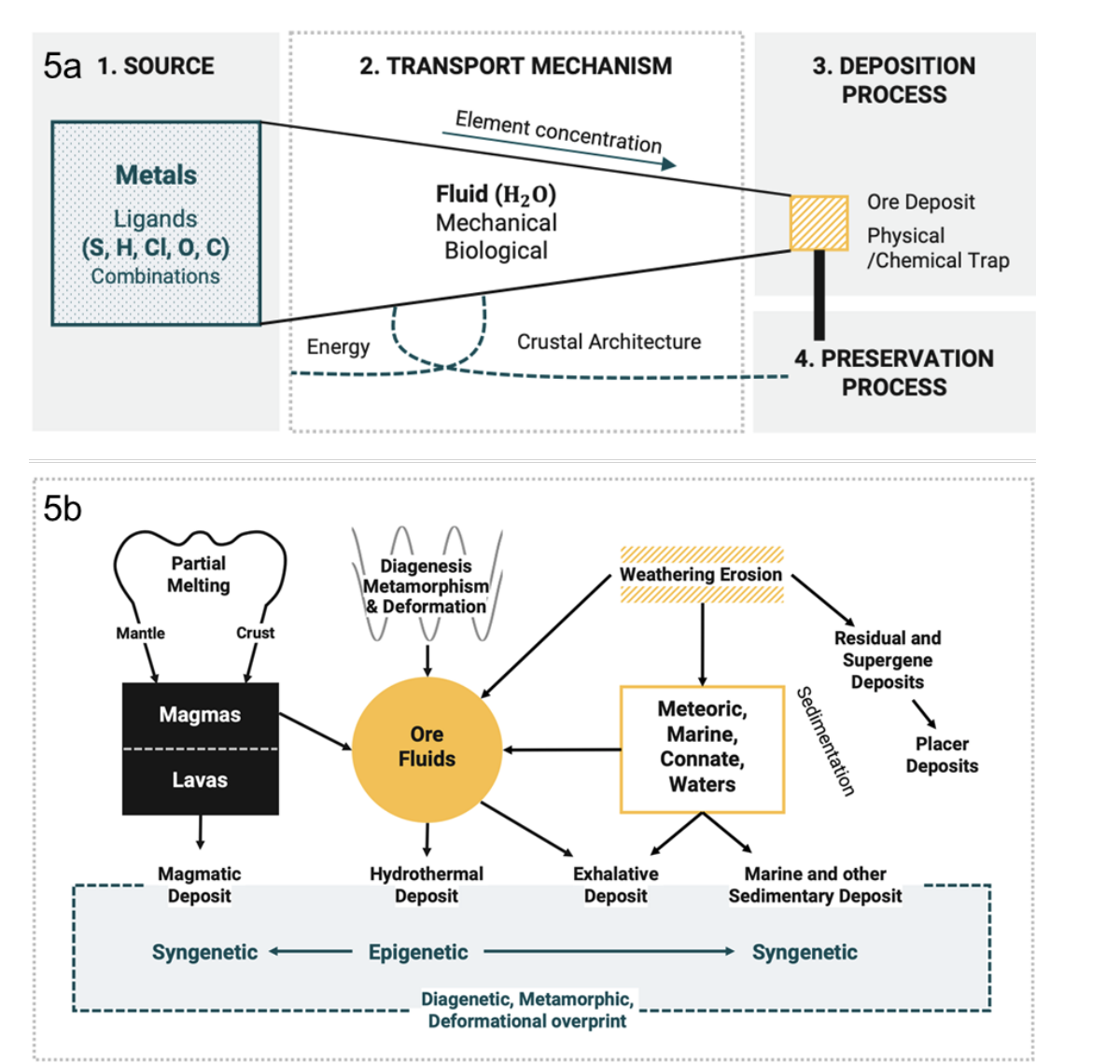
Across three projects in northern Chile, this explorer holds a position in the geological provinces hosting Escondida and Collahuasi. The lead property lies approximately 22 kilometres west of Escondida; another sits along the Domeyko Fault Zone, which also hosts Collahuasi, Chuquicamata and El Abra. Porphyry deposits form as cooling magma releases hot fluids into fractured rock, distributing copper minerals through bodies of rock that can contain hundreds of millions or billions of tonnes of material. Their scale can sustain decades of production. Escondida produced 1.261 million tonnes of copper in the year to June 2026, while Collahuasi reported approximately 404,000 tonnes and US$4.24 billion in revenue for calendar 2025. pubs.usgs.gov
The exploration programme combines geophysics, copper isotope analysis, mineral chemistry and machine learning to guide drilling. In porphyry exploration, geochemical signatures help researchers assess whether the magma and its fluids were favourable to concentrating copper. High strontium to yttrium ratios can accompany magmas rich in water, while minerals such as epidote preserve traces of the fluids that altered the surrounding rock. These indicators help exploration follow a chemical trail beyond the copper itself. Copper isotope measurements and the orientation of mineralised veins can provide further clues to the system’s geometry. Computational inversion works backwards from geophysical measurements to estimate the properties and arrangement of buried rock. Drilling then tests those interpretations and establishes the extent and continuity of mineralisation. Copperman
SKGP’s engagement with the founder has informed its research into the transition from exploration to resource definition and mine development. Leadership and advisers bring experience from major Chilean operations and companies including Continental Gold and Nevsun. For comparison, BHP estimates that Escondida’s proposed new concentrator will require US$5.4 billion to US$6.3 billion in investment and provide annual copper production capacity of 230,000 to 270,000 tonnes. Those figures illustrate the scale of development at an established operation. The explorer’s own production potential and valuation will depend on confirmed resources, recoveries, construction requirements and financing. The investment thesis centres on entering before those milestones, when geological confirmation can materially change asset value and access to development capital.
In Québec’s Eeyou Istchee James Bay region, a developer controls approximately 330 square kilometres of claims covering roughly 50 kilometres of prospective basin margins. Shareholders include the founders of Ivanhoe Mines, Goldcorp and Sprott, alongside the chair of Hancock Prospecting. Their careers span the financing and development of Voisey’s Bay, Oyu Tolgoi and the Kamoa copper complex, as well as Roy Hill’s integrated mine, railway and port. The target is a magmatic sulfide system. Within these systems, a liquid rich in sulfur separates from the magma, collects copper, nickel and precious metals from the surrounding melt, and can accumulate in dense bodies. The principal copper discovery contains an indicated resource of 4.145 million tonnes grading 1.68% copper, with other metals contributing to a reported copper equivalent grade of 3.86%. That equivalent expresses their combined value under stated price and recovery assumptions.
To search beyond the existing intersections, borehole detectors measure muons generated by cosmic rays interacting with the atmosphere. Fewer muons penetrate dense sulfides than the surrounding rock, allowing measurements from underground detectors to reveal differences in density in three dimensions. Covering approximately 55 million cubic metres, the initial survey is designed to be checked against more than 100 drill holes before guiding deeper exploration. Electromagnetic surveys add evidence of conductivity, helping distinguish targets across a much larger area than the defined resource.
Laboratory metallurgy provides a separate test of commercial potential. SGS recovered 98.9% of the copper into a concentrate grading 25.8% copper, alongside recoveries of 93.9% for palladium and 96.8% for platinum. Each tonne of concentrate also contained 41.4 grams of palladium and 23.4 grams of platinum. After grinding liberates the minerals, flotation reagents help selected sulfides attach to air bubbles and rise into a froth for collection. Several payable metals can therefore contribute revenue through a common processing circuit. Nearby, a nickel deposit adds 2.703 million tonnes of indicated resources. Road access and proximity to Québec’s hydropower network strengthen the development setting, with connection and power allocation still to be secured. A preliminary economic assessment targeted for the first half of 2027 will examine shared infrastructure and whether the resource and laboratory results translate into an economic mine.
Donor mitochondria form the basis of a therapeutic programme introduced to SKGP, initially targeting amyotrophic lateral sclerosis, or ALS. Inside cells, mitochondria use an electrochemical gradient across their inner membrane to produce ATP, which supplies energy for much of cellular activity. Neurons depend heavily on that supply. Mitochondrial dysfunction can also disturb calcium regulation and increase damage from reactive molecules, giving researchers several reasons to investigate whether functional organelles can help preserve diseased tissue. Published studies have examined fibroblasts and mesenchymal stromal cells as sources of donor mitochondria, which are isolated for transfer into recipient cells. Earlier laboratory experiments demonstrated mitochondrial uptake and restored respiration in cells depleted of mitochondrial DNA. Clinical benefit remains to be established. www.scirp.org
Preserving that function through preparation is critical. Isolation must leave the mitochondrial membranes intact, while ATP production and oxygen consumption provide measures of activity. Published research found that mitochondria isolated from cryopreserved donor cells retained function comparable to those obtained from fresh cells. The proposed manufacturing approach described in that research would bank the donor cells and isolate their mitochondria at treatment sites using closed processing equipment. This could reduce dependence on growing fresh cell cultures whenever treatment is needed. Leadership combines scientific training with experience commercialising nanotechnology and directing AI research at Lockheed Martin. Research relationships with Greenwood Genetic Center, the Department of Veterans Affairs and Walter Reed extend the programme into neurodegeneration and traumatic brain injury, while participation in NVIDIA Inception supports computational development and clinical analytics. scirp.org
Approximately 35,000 people in the United States live with ALS. Clinical development must establish safety, appropriate dosing and whether improvements in cellular function translate into meaningful benefits for patients. Parkinson’s and Alzheimer’s remain additional research directions. Reproducible manufacturing could support development across several indications, each requiring its own clinical evidence. For SKGP, the attraction is the connection between a biological mechanism, the means to manufacture it consistently and the clinical infrastructure needed to deliver treatment. www.cdc.gov
Between a referral and an appointment, somebody still has to locate records, obtain any necessary authorisation and reach the patient. Much of that coordination takes place around the medical record, through calls, documents and repeated requests. Aurune is being developed to carry those activities through to completion. Its proposed interface, Horizon, would give patients and caregivers a continuing view of their care across providers, bringing records and laboratory results together with information from home devices. Each request would have a visible status and a clear next step. With access appropriate to their responsibilities, clinical teams, pharmacies, laboratories and payers could act on shared information. Supervised AI agents would help reconcile documents, prepare forms and advance referrals, refills and appointments, while clinical decisions remain with the responsible professionals.
Alongside Aurune, SKGP Healthcare Holdings is the proposed vehicle for acquiring and building care businesses for ownership over the long term. Clinics, diagnostic services and laboratories would provide the initial scope, with hospitals a potential extension as the platform develops. Aurune would supply operating capabilities across those businesses and offer software, implementation and services to independent providers. Shared data and computing infrastructure could support both, spreading development costs as adoption grows. Within an acquired clinic, fewer incomplete referrals and better scheduling could release appointment capacity while reducing administrative time per completed episode of care. Earnings retained at the holding company could finance further improvements, additional facilities and subsequent acquisitions.
The economic base would combine care delivered through productive facilities with revenue from external services. As new diagnostics and treatments demonstrate clinical and commercial value, the business could add the equipment, specialist teams and coordination needed to make them accessible. Local care would remain distributed across the network, supported by capabilities developed centrally and improved through use. Aurune's purpose is to make healthcare easier to access and more continuous throughout a person's life, with successive advances in medicine extending what the business can provide.
Stockpiles and mine tailings can retain metal that existing processes cannot recover economically. Biomining examines whether biological activity can change that calculation. Microorganisms that oxidise iron regenerate ferric iron, which attacks sulfide minerals and helps release metals into solution. Other organisms oxidise sulfur, producing acid that sustains the leaching process. The resulting liquid still requires separation and purification before its metal becomes a saleable product. Recovery rates depend on the mineral feed and on conditions within the material, including oxygen supply, temperature and the movement of fluids. pmc.ncbi.nlm.nih.gov
Endolith's initial US$13.5 million Series A, announced in November 2025, offers a commercial reference for microbial extraction informed by operating data. Machine learning can help select organisms and process conditions suited to a particular feed, with modelling and process control forming capabilities that can be reused across sites. SKGP's research considers how such methods could support a business providing recovery services to outside mines while improving acquired assets. Reusing suitable roads, power and processing equipment could reduce the capital needed to bring additional output to market. Material previously assigned little value may then support revenue, extend an operation's productive life or make better use of idle facilities. newsroom.squadra.vc
SKGP biomining research · Iron and sulfur cycling in mine tailings
Sunlight collected in orbit could supply electricity beyond the daylight hours available at a given location on Earth. In 2023, Caltech's MAPLE experiment demonstrated wireless power transfer between receivers in space and transmitted a detectable signal to the ground. By coordinating the phase of their emissions, its microwave transmitters made the waves reinforce one another toward a chosen receiver. Ground receiving systems would use antennas and rectifiers to convert microwave energy into electricity. An alternative approach directs near infrared light onto photovoltaic panels. Overview Energy demonstrated optical delivery from an aircraft more than five kilometres above the ground in 2025 and announced US$20 million in funding. These experiments establish component capabilities; delivering useful electricity at commercial scale requires a much larger integrated system. www.caltech.edu
SKGP's research follows that system from orbital generation to supply under customer contracts. Every conversion loss reduces the electricity available for sale, while the mass of solar arrays and radiators affects launch requirements. Beam control, atmospheric transmission and receiver design influence where and how reliably power can be delivered. An operating company could commission specialist engineering, own selected assets and coordinate generation, transmission and delivery across several locations. Potential customers include utilities and industrial users in Emerging markets, alongside mines, processing plants and computing facilities connected to SKGP's wider activities. The commercial measure would be dependable electricity delivered at a cost those customers can support.
Caltech MAPLE experiment · Ground receiving systems · Airborne optical demonstration

SKGP Strategic Partners
© 2026 SKGP Strategic Partners. All rights reserved. All proprietary frameworks, research, and materials are the intellectual property of SKGP Strategic Partners. Unauthorized use or distribution is prohibited.